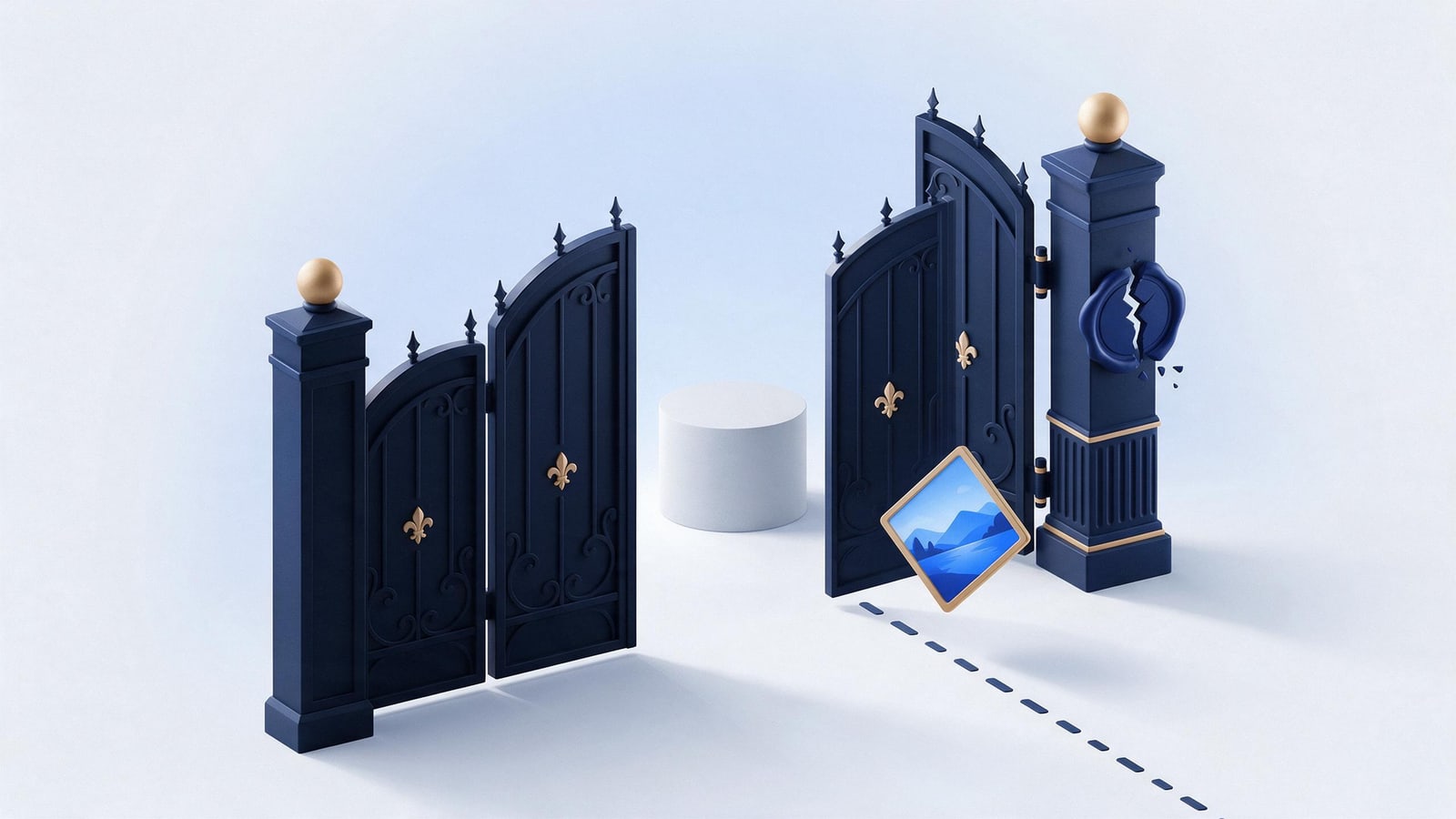
Short answer: a Creative Commons license is a full copyright, and violating its conditions is copyright infringement, not bad etiquette. The creator keeps every exclusive right under US law, reproduction, distribution, public display. The license is conditional permission, nothing more. A user who steps outside the conditions loses that permission, and the ordinary enforcement toolkit applies.
The fastest fix is usually a DMCA takedown sent to the host, backed by the fact that CC licenses terminate automatically on breach. Below: what each condition means, when attribution failures cross the line, how DMCA enforcement works, and what termination does to the violator's position.
Why a Creative Commons License Is Still a Full Copyright
Creative Commons is a US nonprofit that publishes standard-form licenses. Applying one does not thin out the creator's ownership. The photo, article, song, or dataset stays fully protected for the normal copyright term, and the creator remains the copyright owner with every remedy the Copyright Act provides.
The license just tells the world: you may use this work if you follow these named conditions. "Some rights reserved" instead of all rights reserved. A licensee has permission only inside the fence; outside it, the use is unauthorized, exactly as if no license existed.
One exception worth knowing: CC0. A CC0 dedication is a public-domain-style waiver with no conditions, so there is no license left to breach. Everything in this article covers the six standard licenses built from four conditions: BY, BY-SA, BY-NC, BY-NC-SA, BY-ND, and BY-NC-ND.
What BY, NC, ND, and SA Actually Require
Every standard CC license is assembled from up to four conditions. Which one is broken determines what kind of case you have.
BY, attribution. Present in all six licenses. The user must credit the creator, keep copyright notices, identify and link the license, mark changes made, and avoid implying the creator endorses them. Version 4.0 accepts a "reasonable manner": no footnote needed in a social caption, but the creator must be named and the license identifiable.
NC, non-commercial. The use must not be primarily intended for, or directed toward, commercial advantage or monetary compensation. Selling prints, running the photo in ads, printing it on merchandise: clearly commercial. Gray zones cause fights, an ad-supported hobby blog, a nonprofit fundraiser, a corporate social account. CC's guidance says look at the use, not the user, but NC remains the most disputed condition in practice.
ND, no derivatives. The work may be shared only in unadapted form. Translations, remixes, recuts, and edited versions cannot be redistributed under the license. Technical conversions needed to display or stream the work, like resizing or re-encoding, do not count as adaptations.
SA, share-alike. Anyone who adapts the work must license their adaptation under the same license. It does not restrict verbatim copies. SA is the close cousin of copyleft in open source, where GPL enforcement has already proven these conditions carry real teeth.
Version matters. CC 4.0 is current and more precise about attribution flexibility; 3.0-era licenses are everywhere and handle some issues differently. Identify the exact license and version before acting.
When Attribution Failures Become Infringement
Attribution is a license condition, not a courtesy. When it fails, the user has used the work outside the license, and the law's response is ordinary: unauthorized reproduction and public display of copyrighted material. That is the whole chain of logic, and it holds.
Failures come in two sizes. Total omission: no credit, no copyright notice, no license link. Defective attribution: the creator is named, but the license is misidentified, the link is missing, or the credit reads "source: internet." Under 4.0's reasonable-manner standard, a trivial formatting slip rarely rises to a breach. Omitting the creator or the license does.
Stripped credits add a second hook. Section 1202 of Title 17 creates liability for intentionally removing copyright management information, author name, copyright notice, license terms, identifying links, and then distributing the work. A designer who deletes your attribution block to tidy a layout may face that count on top of infringement.
Proof and deterrence both pay off here. Watermarking photos at publication makes silent theft harder, and EXIF metadata helps establish which copy originated with you. Screenshot and archive the offending page before anything else.
Filing a DMCA Takedown Over a CC License Violation
As the licensor, you are the copyright owner, exactly the person the DMCA notice-and-takedown process exists for. The framing is simple: the user's copy of your work is not licensed, because the use exceeds the license, so the host should disable access.
The notice needs the standard elements: your contact details, identification of the work and the license terms violated, the infringing URL, a good-faith statement that the use is unauthorized, and the penalty-of-perjury statement. Our filing walkthrough and the anatomy of a DMCA notice cover those; the CC-specific move is naming the license, the version, and the exact condition broken, which preempts the usual host pushback.
If you cannot tell who hosts the site, identifying the hosting provider comes first. A takedown is usually faster and cheaper than opening with a cease-and-desist letter, though a letter fits when the relationship matters or the breach is genuinely gray.
Expect uneven responses. Most hosts remove material promptly to protect their safe harbor. Some treat license-scope disputes, especially NC fights, as private contract matters outside the DMCA. That position is arguable, but arguing with a reluctant host rarely works. The escalation paths below close that gap.
License Termination on Breach: Why It Changes the Case
This is the part most people miss. Under CC 4.0, the license terminates automatically the moment a user breaches it. No notice required, no warning shot. From that instant, every continued copy, share, or display is unlicensed use of copyrighted material, the same as if the license had never existed.
The Federal Circuit grounded this principle in 2008 in Jacobsen v. Katzer, an open-source dispute. The court held that license conditions are copyright conditions: violate them and you do not merely breach a contract, you lose your permission and infringe the copyright. Later courts have extended the reasoning to other conditional licenses, and CC licenses are built on the same condition-based structure.
Two nuances matter in practice. CC 4.0 lets a terminated license be reinstated if the user cures the breach, unless you expressly terminate it; earlier versions handle reinstatement differently, so check yours. And a breach by one user does not taint downstream copies, recipients who comply with the license keep it.
Termination also changes the money picture. Once the use is outright infringement, statutory damages, $750 to $30,000 per work, up to $150,000 for willful infringement, enter the frame, subject to registration timing.
Counternotices and Fair Use: What Happens If They Fight Back
A takedown can be contested. The user may claim they complied with the license, or that their use is fair. Fair use operates independently of any license, someone can make a fair use of an NC-licensed photo without permission, and a court would assess that defense outside the license entirely.
If they send a counter-notice, the clock shifts to you. The host typically restores the material within 10 to 14 business days unless you file a court action. Knowing what a counter-notice must contain and what happens after one is filed before you send your notice is far better than learning it mid-dispute.
Careless filing has a price. In the Ninth Circuit's "dancing baby" case, Lenz v. Universal, the court made clear that copyright owners must consider fair use before sending takedowns, and a notice sent in the face of obvious fair use can create misrepresentation liability under Section 512(f). See how the Lenz case unfolded for the full story. The practical rule: file where the breach is clear, no attribution, NC material on merchandise, the work resold. For gray-zone uses, a demand letter first is the safer opener.
Common CC Violations and How Platforms Respond
A handful of fact patterns account for most CC disputes. NC works show up on commercial products, a photograph printed on t-shirts or mugs, or content resold at a discount through marketplaces, which usually remove on a clear NC showing. NC music and footage appear in monetized YouTube videos, where the platform's own monetization is strong evidence of commercial use. ND works get re-edited and republished as remixes, recuts, or translated articles. SA adaptations get relicensed more restrictively than the license requires. BY works get scraped into content farms with the credit stripped, sometimes bundled into paid stock collections. A newer pattern is commercial AI training pipelines ingesting NC-licensed images, where commercial intent is central to the business model.
Platform responses are uneven, and platform policy sometimes matters more than law. Some hosts see the words "license dispute" and decline to act even where the copyright analysis favors you. Write the notice so no one has to research your license: name the license, the version, the condition broken, and the evidence in one short paragraph. If the host will not move, Google's DMCA removal process can still take the URL out of search results, and repeat violators eventually collide with platforms' repeat-infringer termination policies.
What You Can Recover Beyond the Takedown
A takedown restores control. Recovering money takes more, and US law is unforgiving about timing.
In litigation, a prevailing copyright owner can seek actual damages plus the infringer's profits, an injunction, and attorney's fees, but statutory damages and fees generally require timely registration: before the infringement began, or within three months of first publication. Registration is never required to send a DMCA notice, yet it is what makes the remedies available that make violators settle. If you expect to enforce, registering the copyright is usually worth it.
For smaller disputes, the Copyright Claims Board, the US copyright small-claims tribunal, offers a simpler process with awards capped at $30,000 per proceeding. It was built for exactly the situation CC creators face: clear infringement, modest stakes, no budget for federal court. Read up on the Copyright Claims Board process before assuming federal court is the only door.
Most CC disputes never reach a forum. Once a violator learns the license terminated automatically and statutory damages may apply, a documented demand letter does most of the work. When the fight turns contested, cross-border, or high-value, that is the moment to bring in a copyright attorney.
Where Local Law and Platform Rules Change the Outcome
CC licenses are drafted to travel: the same text is meant to work across legal systems. But local law fills the gaps, and the answers shift abroad.
Attribution claims often get stronger in Europe, where moral rights are inalienable in many countries, the creator's right to be named does not depend on license mechanics. NC gets read differently too. German courts, in some published decisions, have treated use on ad-supported websites as commercial use, a reading stricter than what most US platforms apply.
The takedown machinery itself differs. The US safe-harbor regime has no exact twin in the UK, where copyright takedown notices rest on a different legal mix. The EU's Digital Services Act has its own notice-and-action mechanism for platforms. Canada runs a notice-and-notice system: the host forwards your notice to the alleged infringer, but nothing comes down on a DMCA-style timeline.
For a US-based licensor chasing a foreign host, the practical route is usually the same: use the platform's abuse channel, frame the claim around reproduction rights rather than license terminology, and be ready to work through hosting layers rather than a single site.
Frequently asked questions
Can I file a DMCA takedown over a broken Creative Commons license?
Yes. You are the copyright owner, and a use that exceeds the license is an unauthorized reproduction or public display of your work. Identify the work, the license and its version, the condition violated, and the infringing URL in your notice. File when the breach is clear; an arguable license dispute invites a counter-notice.
What counts as proper Creative Commons attribution?
Under CC 4.0, credit the creator by the name they specify, keep any copyright notice, identify and link the license, mark changes you made, and avoid implying endorsement. A reasonable manner is enough, so a trivial formatting slip is not a breach. Omitting the creator's name or the license identification is.
Does violating a CC license terminate it permanently?
Under 4.0, termination on breach is automatic but not always permanent. If the user stops violating the license, it can be reinstated unless you expressly terminate it. Earlier versions handle reinstatement differently, so check the version attached to your work. Compliant downstream users keep their licenses either way.
Can someone claim fair use even though my work carries a CC license?
Yes. Fair use is assessed independently of any license, so a user can argue their use is fair despite NC, ND, or attribution problems. If the use looks plausibly fair, filing a takedown carries Section 512(f) misrepresentation risk. Consider the four fair use factors before you file.
Do I need to register my copyright to enforce a CC-licensed work?
No. Registration is not required to send DMCA takedowns or termination notices. It matters for money: in US court, statutory damages and attorney's fees generally require registration before the infringement began, or within three months of first publication. Creators who expect to enforce should register early.
Get the order of operations right and most CC disputes resolve without a courtroom. One caveat first: this article explains how enforcement typically works, not legal advice for your specific facts.
- Preserve evidence immediately, screenshots, archived copies, full URLs, working from a takedown evidence checklist.
- Pin down the license, the version, and the exact condition broken. One sentence, in writing.
- Send a DMCA notice to the host or platform's designated agent or copyright report form.
- If the host ignores you, escalate: search delisting, marketplace IP portals, a demand letter, or the Copyright Claims Board.
- If your work keeps getting lifted, run periodic copy scans or move to managed monitoring like ProtectionPro so the next violation surfaces before it spreads.