
Most copyright problems never require a lawyer. Someone reposts your photo, lifts your article, or uploads your track to a piracy site, and a properly prepared takedown notice, the kind our team files every day, gets it removed. The DMCA process was built for people without counsel, and for one-off incidents of obvious copying, that design holds up.
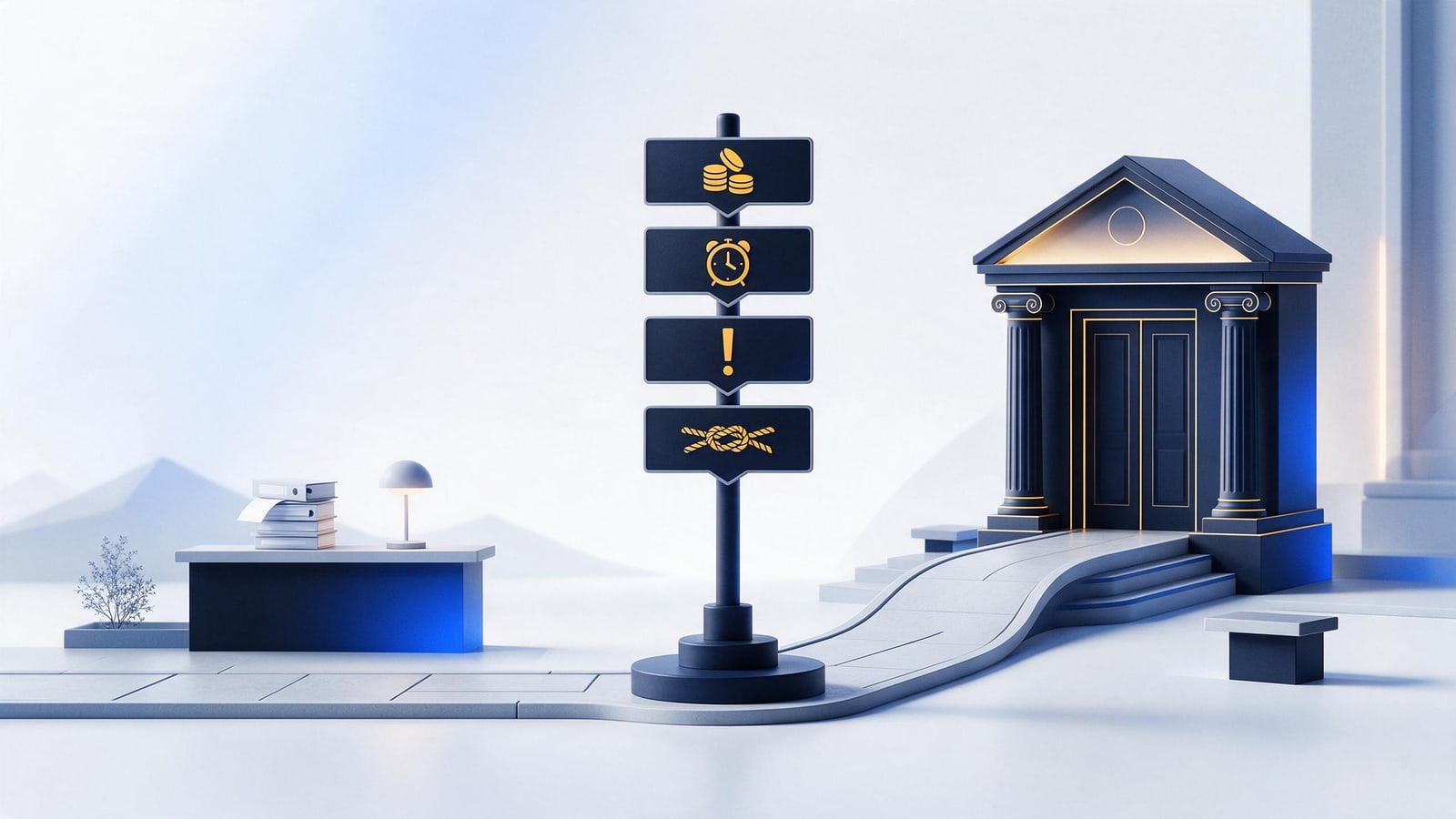
Hire a copyright lawyer when one of four things shows up: real money is on the line, a legal clock is running, someone is threatening court, or the rights themselves are tangled. This page walks through each signal, what counsel actually costs, how the Copyright Claims Board compares as a cheaper venue, and what to bring to your first call.
What a Copyright Attorney Does That a Takedown Service Cannot
A takedown service and a lawyer solve different halves of the problem. A service like ours works the enforcement machinery: locating copies, filing notices under the DMCA framework, chasing hosts, tracking re-uploads. That machinery is administrative. It moves content. It does not decide who owns what, whether a license covers a use, or what a contract clause means. For the distinction in plain language, see our explainer on the difference between copyright and DMCA.
A copyright attorney does what only a lawyer can: interpret licenses and transfers, draft and negotiate contracts, send demand letters that carry the weight of bar-admitted counsel, and file or defend a lawsuit. Attorneys owe you confidentiality and answer to a state bar when things go wrong. The pattern that works best in practice is a division of labor: a service handles routine removals at volume; counsel handles the one dispute carrying genuine risk. We are a takedown company, not a law firm, and we say so plainly. Good counsel makes takedown work safer, not redundant.
Signal One: Real Money Is on the Line
Scale changes the math. A stray repost on a personal blog costs you almost nothing, and spending legal fees on it loses money by definition. But when infringement touches revenue, a paid course circulating on Telegram, a competitor listing your product photos, a shop undercutting you with your own designs: the numbers start justifying professional judgment. Our coverage of stolen course content shows how quickly leaked commercial material turns into lost sales, and the pattern repeats across every medium. Once the other side is monetizing your work, or a licensing deal depends on exclusivity you can no longer promise cleanly, involve counsel early.
Money also changes the legal stakes. A US copyright owner with timely registration can elect statutory damages instead of proving actual losses: generally $750 to $30,000 per work under 17 U.S.C. § 504(c), up to $150,000 for willful infringement, with the floor reduced to $200 for genuinely innocent infringers in some circumstances. Our pages on copyright infringement penalties and how statutory damages work break the numbers down. The catch is timing: statutory damages and attorney's fees generally require registration before the infringement or within three months of first publication. Our article on whether copyright registration is worth it explains why that deadline shapes everything. And a lawyer runs the cost-benefit analysis you cannot run yourself: whether settlement, a licensing deal, or litigation maximizes what you actually keep.
Signal Two: A Counter-Notice Started the Clock
Send a takedown and the other side has a comeback: the counter-notice. Under 17 U.S.C. § 512(g), once a host forwards a proper counter-notice, it must restore the material within 10 to 14 business days, unless you file a federal court action seeking to restrain the infringement and notify the host. That is the part people miss. A counter-notice does not end your enforcement; it starts a countdown measured in business days. Either you sue, or the content comes back. Our pages on what happens after a counter-notice and how a DMCA counter-notice works cover the mechanics.
The decision inside that window is a legal judgment: is this worth a federal case? A copyright lawyer can usually answer that in one consult. If you are on the receiving end, the calculus is similar. A counter-notice is a sworn statement, made under penalty of perjury, that the material came down by mistake or misidentification. If you sign one while your "license" is a forwarded email and half a memory, you are inviting damages under § 512(f) for knowingly material misrepresentation, including costs and attorney's fees. We cover that exposure in fighting back under Section 512(f). When any part of your defense rests on a license or a fair-use theory, get counsel's read before you sign anything.
Signal Three: Someone Is Threatening Litigation
A demand letter from a law firm, a draft complaint attached, a deadline in bold type. These change the conversation from enforcement to litigation risk, and both sides benefit from counsel here.
If you are the accused, rule one is not to ignore it. Default judgments are how modest disputes become ruinous ones. Rule two is to have the letter read by a lawyer who handles copyright specifically, because the threat's real weight depends on details. Was the work registered before the infringement or within three months of publication? Section 412 timing controls both statutory damages and fee-shifting. Can the owner even sue yet? The Supreme Court's 2019 Fourth Estate Public Benefit Corp. v. Wall-Street.com decision confirmed that US owners need the Copyright Office's registration decision, approval or refusal, in hand before filing suit. An attorney can also check whether your insurance responds. General liability policies usually exclude intellectual property claims; media liability policies often cover them. That answer can change a defense posture overnight.
If you are the owner, the same letter can be your opening move, and lawyers write the ones that work. A demand from counsel prices escalation credibly and hands the recipient a face-saving exit. Most copyright disputes settle before trial, and a credible letter is often the reason.
Signal Four: The Licensing Is Complicated
Some disputes are not about whether copying happened, but about whether it was permitted. Split ownership among co-writers. Exclusive versus non-exclusive grants. Work-made-for-hire language in a contractor agreement. Sync and mechanical rights in music, where "I have a license" tends to fall apart on inspection, our guide to sync and mechanical licensing shows the seams. Creative Commons terms with attribution strings attached. Termination rights that can claw assignments back decades later. These are contract questions. Takedown services cannot interpret your contracts and should not try; that is legal advice.
A concrete example: a podcaster licenses a track for "online distribution," receives a takedown when the episode lands somewhere the licensor disputes, and now has to decide whether the license covers the use. The enforcement step is easy; the contract read is not. We handle DMCA issues for podcasters constantly, and the pattern holds everywhere. When the other side answers your takedown with "I licensed this," stop filing notices and get the paperwork to a copyright lawyer. Every notice you send after that point is a bet on a contract you have not read.
What a Copyright Lawyer Costs, and How the Copyright Claims Board Compares
Be realistic about both sides of the ledger. Experienced copyright counsel commonly charges from the low hundreds to $500 or more per hour, depending on market and seniority. Routine work is often flat-fee; a solid demand letter frequently quotes from several hundred dollars into the low four figures. Contested federal litigation is a different animal, and a copyright case through trial can cost six figures either way.
Congress built a middle path for smaller claims. The Copyright Claims Board, a small-claims tribunal the Copyright Office has operated since 2022, hears infringement and related claims capped at $30,000. The filing fee currently sits at about $100 for claims covering up to 30 works, and hearings run by video. No lawyer is required; the CCB was designed for self-represented parties. The tradeoffs are real: it cannot issue injunctions, its determinations are final subject to only narrow review, your work must be registered (a pending application can be completed during the case), and the respondent can opt out for a small fee and force the dispute into federal court. The CCB works best against opponents who genuinely want a resolution. Our guide to the Copyright Claims Board process covers the details. For context on the cheaper rung below counsel, compare those fees with what a DMCA takedown costs, typically tens to a couple hundred dollars per notice. That gap is exactly why the service-and-counsel split makes economic sense.
When You Probably Do Not Need a Copyright Attorney
Keep the list short. One or two clear infringements, works you own outright, no counter-notice, no contract dispute, nobody making money off the copying: a takedown service or a DIY approach is proportionate, and you can escalate later if the facts change. Platform policy, strike systems, repeat-infringer terminations, Content ID and similar tools, resolves most of these without a courtroom.
Escalate when your takedown comes back rejected because the real fight is fair use or licensing, when the same infringer keeps resurfacing across platforms, when the other side retains counsel, or when any signal above applies. One boundary worth flagging: this page assumes US law. If the infringer operates from abroad, enforcement runs through the host's policies and local law, and outcomes diverge sharply by country. American counsel still matters there, but geography is often the deciding variable.
What to Bring to the First Call With a Copyright Lawyer
Initial consultations are usually short and often free or flat-fee, so arrive organized. Have ready:
- Registration status, your certificate, your application number, or a plain admission that you never registered.
- A timeline, when you created the work, published it, discovered the infringement, and everything that has happened since.
- Copies, live URLs, archived captures, dated files. Our takedown evidence checklist and guide to timestamp evidence for copyright describe what actually holds up.
- Paperwork, every license, contract, assignment, and email thread touching the work, including anything the other side has sent you.
- Numbers, what the infringement has cost you, or earned for them, even as a rough estimate.
- Your objective, removal only, money, a licensing deal, or an injunction. Lawyers scope the work to the goal.
Ask practical questions too: who will actually do the work, what is hourly versus flat-fee, and whether the claim fits the CCB better than a district court. If you do not have counsel in mind, state and local bar association referral services are one starting point. For recurring enforcement, pairing counsel with ongoing monitoring through Protection Pro keeps routine removals off the lawyer's bill.
Frequently Asked Questions
Can I file a copyright infringement claim without a lawyer?
Yes, in most venues. DMCA takedown notices require neither a lawyer nor a court. The Copyright Claims Board was designed for self-represented parties, though contested cases still benefit from counsel. Federal court technically allows self-representation, but copyright procedure and fee-shifting rules punish amateur mistakes. A common hybrid: a takedown service handles removals while a lawyer owns the escalation path.
How much does a copyright lawyer typically cost?
Rates vary by market and seniority, but experienced copyright counsel commonly charges from the low hundreds to five hundred dollars or more per hour. Demand letters and registration work are often flat-fee, running from several hundred dollars into the low four figures. For small claims, the Copyright Claims Board's filing fee is around $100 and no lawyer is required, the inexpensive venue by design.
Do I need a lawyer after receiving a DMCA counter-notice?
You have 10 to 14 business days to file a federal action before the platform restores the material, so get a consult immediately even if you end up deciding not to sue. Filing is a decision you cannot unmake, and only counsel can gauge whether your claim justifies it. If you received a notice rather than sent one, have a lawyer review your counter-notice before you sign it.
Can a copyright lawyer recover attorney's fees from the infringer?
In federal court, yes, if you registered the work before the infringement or within three months of first publication. That Section 412 timing rule is why late registration quietly shrinks settlement leverage. Section 512(f) separately shifts fees onto parties who knowingly file false takedown notices or counter-notices. The CCB treats fees more narrowly, so fee-shifting matters mainly in district court.
Should I hire a copyright attorney or a general intellectual property lawyer?
Copyright is a specialty within intellectual property. A general IP practice may handle trademarks and patents alongside copyright, which is fine for simple matters. For litigation threats, licensing disputes, or fee-shifting questions, ask directly about the attorney's copyright docket: registrations filed, disputes resolved, cases litigated. The specialist premium is usually smaller than a generalist's learning curve.
What to do now
If any of the signals above fits your situation, move in this order:
- Write down, on one page, the money involved, every deadline, especially a counter-notice date, and the outcome you actually want.
- Check your registration status with the Copyright Office. Late registration quietly costs you statutory damages and fee recovery, so fix that first if it is fixable.
- If none of the four signals applies, start with enforcement: file takedowns yourself or through a service. Our pricing page lays out the options.
- If even one signal applies, book a copyright consultation this week. Clocks in this field run in business days.
- Preserve everything and stop discussing the dispute publicly. Screenshots and silence age well; commentary does not.
This page is general information, not legal advice. Only a licensed attorney who has seen your facts can tell you where you stand, and if you are genuinely unsure whether you need one, that uncertainty is itself a reason to make the call.