
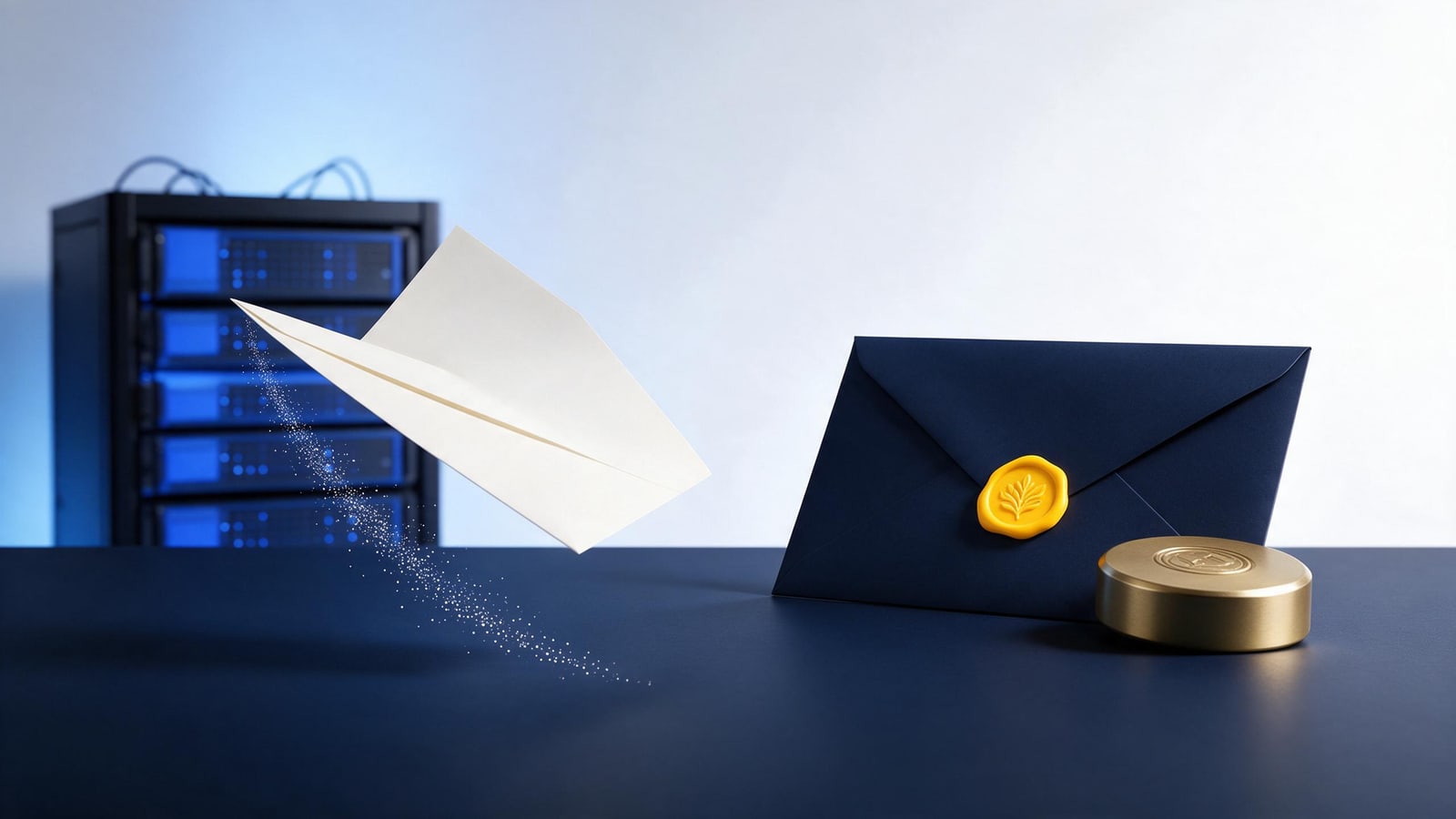
Choosing between DMCA vs cease and desist is a choice of machinery, not goals. Both letters exist to make someone stop using what belongs to you. A DMCA takedown notice is a statutory filing: when a US service provider receives a valid one, 17 U.S.C. § 512(c) puts its legal immunity on the line until it removes the material or blocks access. A cease and desist letter is a demand, usually attorney-drafted, backed by nothing except the lawsuit it implies.
The short version: the takedown is free, usually works in days, and covers copyright only. The demand letter costs hundreds of dollars, obligates no one, and works only when there is a real person or business on the other end with something to lose, but it reaches trademark misuse, defamation, contract violations, and everything the DMCA cannot. Pick the wrong letter and you waste money, momentum, or both.
How a DMCA takedown notice works
The takedown is the only tool here with built-in consequences. Under 17 U.S.C. § 512(c), a provider storing user content is immune from copyright liability, but only while it honors valid notices. Remove the material and the immunity holds; refuse and the provider can be sued as if it posted the material itself. That trade is why a one-page letter moves billion-dollar platforms without a lawyer's signature. How safe harbor works is the background; what a DMCA takedown notice is is the anatomy.
The practical core is § 512(c)(3): a valid notice is signed, carries your contact information, identifies the copyrighted work, pinpoints the infringing material so the provider can locate it, states a good-faith belief that the use is unauthorized, and includes a statement under penalty of perjury that your information is accurate and that you are authorized to act for the owner. Miss an element and the provider may treat the notice as invalid, what to do when a takedown is rejected is usually a formatting fix, not a legal defeat.
Two details people miss. First, the perjury clause covers your identity and authorization, not your judgment that the material infringes, the Ninth Circuit said exactly that in Rossi v. MPAA (2004): candid belief is not perjury. What the statute does punish, in § 512(f), is knowingly making a material misrepresentation, so file in good faith and skip the notice in fair-use situations where filing backfires. Second, the statute requires providers to act expeditiously and sets no day count; in practice, large platforms clear valid notices within days. One boundary: the DMCA is US law. Many foreign providers honor notices voluntarily, but results abroad depend on local regimes, whether the DMCA works internationally is its own question.
How a cease and desist letter works
Nothing in the law obliges anyone to answer a demand letter. It works like a raise in poker: the recipient reads it, checks who wrote it, and decides whether the lawsuit behind it is real. That is the whole mechanism. The letter identifies the conduct, names the legal theory, infringement, trademark misuse, contract breach, defamation, trade secret theft, sets a deadline, and describes what follows. Deadlines are custom, commonly ten to fourteen days; no statute sets them.
Three things decide whether it gets results or a shrug. Sender: attorney letterhead says the money is already spent and suit is one decision away, which is why a professionally drafted letter runs a few hundred dollars and free templates get ignored. We are a takedown service, not a law firm; demand letters belong with a licensed attorney. Target: the letter goes to the person or business responsible, never the hosting company, providers face no liability for most non-copyright claims over user posts, so a demand aimed at a platform is dead paper. Substance: a copyright demand lands hardest when the work is registered, because timely registration, before infringement starts, or within three months of publication, preserves statutory damages, up to $150,000 per work for willful infringement, plus attorney's fees. Whether registration is worth it is a calculation to finish before the letter goes out.
One underused feature: a delivered demand letter is proof of knowledge. Send it by a trackable method and keep the delivery record, if litigation follows, that record turns a shrug into a willfulness finding.
What each tool can legally reach
The DMCA has exactly one subject: copyright. Stolen articles, pirated files, copied photos, resold courses, if someone copied your protected work, the notice is the right instrument. If the problem is anything else, it is the wrong one. Trademark use, defamation, harassment, contract disputes: none of these are copyright, and a notice claiming otherwise risks § 512(f) misrepresentation exposure plus a quiet rejection. Impersonation runs through platform identity channels: impersonation takedowns do not run through copyright notices.
The line between trademark and copyright splits mixed problems into solvable halves. A competitor copying your product photos is copyright. The same competitor advertising under your brand name is trademark. A scam storefront doing both gets both: a takedown notice for the photos, a demand letter or brand program for the mark. Stacking is legitimate. Claiming copyright over a name or a logo you did not author is not.
Matching the tool to the situation
Three facts decide most cases: what was taken, who holds it, and whether they have anything worth suing for. The common scenarios resolve like this:
- Copied content on a site you don't control. Takedown notice to the host or platform. Free, fast, and it works without ever learning who the infringer is.
- Someone selling your content cheap on a marketplace or storefront. Takedown first; the playbook for content sold below your price maps the fastest channel per platform.
- A competitor using your brand or business name. Demand letter, there is a real company with assets on the receiving end. If the brand sits in a domain name, the UDRP route for domain disputes is often the faster play.
- Pirated copies scattered across sites and search results. Takedown at the host, then a Google delisting request so surviving pages stop surfacing in search.
- An anonymous infringer you may eventually want to sue. Takedown first, it needs no name. When the name becomes necessary, the § 512(h) subpoena route can compel the provider to identify the account holder.
- A repeat infringer who re-uploads after every removal. Demand letter. The pattern is documented, which is exactly the exhibit an attorney wants attached.
The pattern across all six: when the content is the problem, the takedown is the tool. When the actor is the problem, the letter is.
The escalation sequence that usually wins
Most disputes end at step one, and that is the point of the sequence. Send the takedown notice. If the material comes down, you spent nothing and the matter is closed. If it reappears, send another, and remember that providers must maintain repeat infringer policies to keep their own safe harbor, so a documented history of takedowns eventually puts the account at risk, not just the file. The strike counters are platform policy layered on a statutory duty.
Save the attorney letter for the moment it changes something: takedowns have stopped sticking because the operator rotates hosts, the conduct is not copyright at all, or an identifiable business is costing you revenue and you are prepared to sue. Sent early, it spends money and reveals your position before the free machinery has finished working. Sent at the right moment, it lands on a target who already knows you enforce.
Whatever the step, keep a dated file: URLs, screenshots, notices sent, responses received. If this reaches a lawyer, that file is what separates a case from a complaint.
The counter-notice window: sue or fold
The takedown process has a trapdoor. If the person who posted the material swears it was removed by mistake or misidentification, they can send a counter-notice, and once the platform forwards it, the statute takes over. The material goes back up in ten to fourteen business days unless you file a court action seeking an order to restrain it. The counter-notice guide has the mechanics; strategy matters more here.
This window is where a takedown strategy becomes a litigation strategy. The options are a federal lawsuit, five figures minimum, or the Copyright Claims Board, the small-claims route for copyright disputes, which caps awards at $30,000 per claim, keeps filing costs in the low hundreds, and lets the respondent opt out and force you back to federal court. A demand letter is near useless here: the other side has already said restore it, and the statutory clock does not wait for correspondence. Decide inside the window whether the material is worth a lawsuit; folding and accepting restoration is a legitimate answer.
Costs, side by side
A takedown notice is free to send yourself; the statute charges no admission. Managed filing, ours included, runs roughly $49 to $199 per notice, formatting, agent lookups, and follow-up when notices stall. A demand letter from an attorney typically runs $300 to $800 for drafting alone. The lawsuit behind it starts in five figures; the small-claims board is the exception. The efficient order is cheap to expensive, and most disputes never leave the first rung. The full breakdown of what takedowns cost is its own guide, and how to choose a takedown service covers when that is money well spent.
Frequently asked questions
Is a cease and desist letter legally binding?
No. A demand letter is exactly that, a demand. It becomes binding only if the recipient agrees to its terms, which creates a contract, or if a court later enters an order. Ignoring it carries no automatic consequence; it only raises the odds of a lawsuit. For the full hierarchy, how court orders differ from both letters is worth a read, only courts compel anyone to do anything.
Can a DMCA takedown be used for trademark or defamation problems?
No. Section 512 is copyright-only machinery, and a notice claiming copyright over a trademark or a statement will either be rejected or expose you to misrepresentation claims under § 512(f). Trademark problems run through demand letters, platform brand programs, or UDRP for domains. Defamation runs through platform reports or state-law litigation. Stacked enforcement is the answer when a single actor is doing both.
Should I send both letters at the same time?
Usually not. The takedown is free and fast, so let it work first; a simultaneous demand letter spends money and hands the other side your full strategy before the cheap tool has had its chance. The exception is a known business whose conduct is ongoing, harmful, and non-copyright, there the attorney letter can lead, and a copyright notice follows for the content itself.
What happens if the infringer ignores my cease and desist letter?
Nothing, automatically. No statute punishes silence, so the options are escalation or acceptance. For copyright. That means federal court or the small-claims board; for trademark, court or UDRP. The letter still earns its keep when ignored: with proof of delivery, it shows the infringer knew, which supports a willfulness argument, the finding that can lift statutory damages toward their $150,000 ceiling.
Do I need a lawyer to send either letter?
No statute requires one. Copyright owners and their authorized agents can send takedown notices directly, which is why DIY toolkits and managed services exist. Demand letters are equally legal without an attorney, but counsel's letterhead signals a serious claim, and a lawyer catches claims you cannot prove. If the dispute may end in court, settle when to hire a copyright lawyer before you send anything.
Your next steps
- Confirm the copying and your ownership. Originals, drafts, dated files, how to prove you own the work covers the evidence that matters.
- Find the receiver. How to find who hosts a site identifies the takedown target; for a demand letter, identify the registered business behind the conduct.
- Send the takedown notice. The free DIY toolkit includes notice templates and a pre-drafted cease and desist letter for the situations that call for one, or a managed service can file and follow up.
- Document everything. Dates sent, responses received, screenshots of the infringing pages, that file makes every later step cheaper.
- Monitor for re-uploads. ProtectionPro watches for new copies, so a repeat infringer gets caught at step one instead of step five.
- Escalate only on evidence. A demand letter when takedowns stop sticking or the conduct is not copyright; a lawyer when the material is worth suing over.