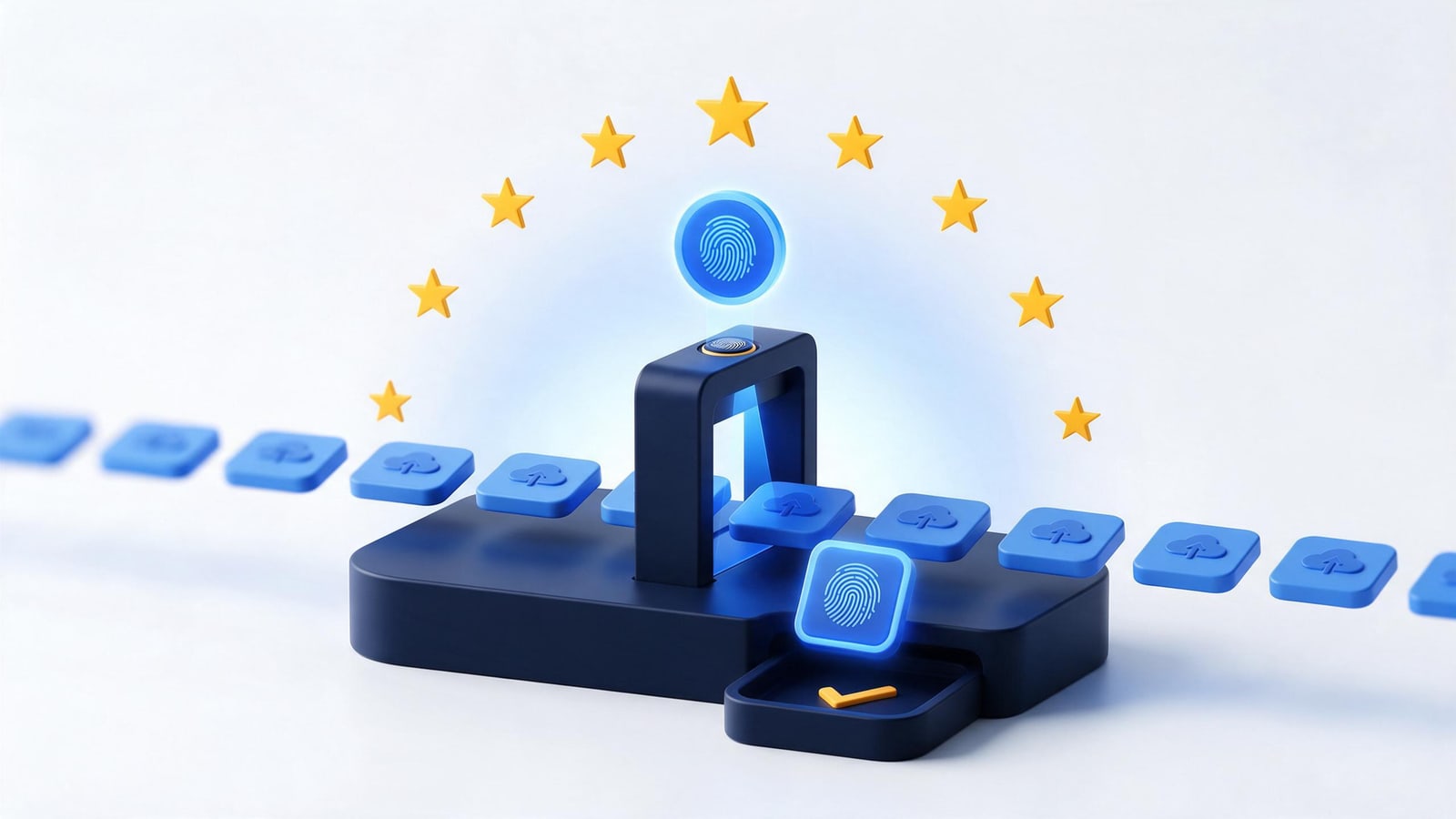
EU Article 17 upload filters are the part of the EU's 2019 copyright directive that holds large content-sharing platforms responsible for what their users post. A covered platform must try to license the copyrighted material on its service, block works its rightsholders have flagged, and keep those works from reappearing. The machinery critics named "upload filters" runs on fingerprint matching applied to every upload. The directive itself never uses the phrase.
For rightsholders, that shifts prevention work permanently onto the platform. For uploaders, it means a machine reads your post before a human does. This guide covers what the law requires, which platforms it touches, and what to do today about a leak or a block.
What Article 17 Actually Changed
The DMCA model, at 17 U.S.C. § 512(c), is a shield you keep by reacting. A platform hosting user content stays immune until a rightsholder sends a notice; then it must act expeditiously. No notice, no duty. Article 17 of the 2019 Copyright in the Digital Single Market Directive reverses that default for one class of platforms. An online content sharing service is liable for infringing content it makes public unless it can show best efforts to license that content, to keep notified works unavailable, and to prevent their re-upload.
Formally, Article 17 displaces the hosting immunity of Article 14 of the EU's E-Commerce Directive for these platforms, the equivalent of carving a hole in safe harbor and filling it with a different bargain. The bargain is the same on both continents: immunity for cooperation. If the DMCA is "act when told," Article 17 is "prove you tried before you're told." For the US mechanics of that shield, how DMCA safe harbor works covers them in detail.
Which Platforms Must Run Upload Filters
The directive covers "online content sharing service providers": for-profit services whose main or essential purpose is giving the public access to large amounts of user-uploaded copyrighted works, which the service organizes and promotes. In practice. That means video platforms, audio platforms, and image-sharing sites built around a content library.
The carve-outs matter more than the definition, because they decide which enforcement channel applies to your problem. Expressly excluded: non-profit encyclopedias, educational and research repositories, open-source development platforms, cloud storage for individuals and businesses, marketplaces, and person-to-person communication services. So a design sold in a marketplace listing, a copied chapter in a repository, or a file in a chat group is not an Article 17 problem at all. Those follow ordinary notice-based channels: the takedown path for marketplace listings works the same way in the US.
Size also matters. When judging best efforts. The directive tells national courts to weigh the service's type, audience, and size, the type of works involved, and the availability and cost of suitable technologies. A two-person platform is not held to the standard of a billion-user service, the duty is proportionate.
How the Best-Efforts Duty Works in Practice
Article 17(4) stacks four duties on covered platforms. Best efforts to obtain an authorization from rightsholders, the licensing duty. Best efforts, where a rightsholder has supplied relevant and necessary information, to keep the notified works unavailable, a stay-down duty. Expeditious removal on notice. And best efforts to prevent future uploads of works already flagged.
For large platforms, the stay-down and prevention duties run on fingerprint matching: a reference database of digital signatures for rightsholder works, checked against each upload before it goes live. The machinery predates the directive by more than a decade. How YouTube's Content ID works, a system that launched in 2007, and Facebook's Rights Manager do the same job for audio and video. What Article 17 changed is turning a voluntary feature into a legal expectation for the whole category.
The directive also preserves the EU's ban on "general monitoring" obligations. A fingerprint database applied to uploads is targeted rather than general surveillance, that distinction is what the system rests on. How content fingerprinting works explains the matching, and why identical copies get caught easily while modified reuploads slip through.
The takeaway for rightsholders: a notified work triggers the stay-down duty. An unnotified work triggers removal only after each separate notice. Supplying reference files and contact details to platforms is how you get the first outcome instead of the second.
Parody, Quotation, and the Uses Filters May Not Block
The feared "meme ban" ran into the directive's own text. Article 17(7) requires member states to preserve their exceptions for quotation, criticism, review, caricature, parody, and pastiche, and it says rightsholder-platform cooperation must not result in the identification and blocking of lawful uses, including the ones those exceptions cover.
Poland challenged Article 17 before the Court of Justice of the EU and lost in 2022, but on conditions. The court upheld the article only on a narrow reading: best efforts must not be understood to require filtering that would block lawful content, including derivative works like parodies and quotations that no filter can reliably separate from infringement. The law obliges platforms to build machinery that errs toward blocking, then obliges them to err the other way for protected uses. The gap between those two obligations is where most real disputes live.
US law reaches the same tension from the other side of the fence. In the dancing baby case, US courts held that a rightsholder must consider fair use before sending a takedown notice. The EU builds that consideration into the platform instead, and gives you a formal complaint route to enforce it.
Why Germany and France Enforce the Same Directive Differently
EU directives are not self-executing. Member states transposed Article 17 into national statutes, and the differences are large enough to change outcomes.
Germany implemented in 2021 with the strongest user safeguards in the bloc: uploads that look like quotation, parody, or other likely lawful uses must get lighter treatment and human review rather than automatic blocking, and platforms must run real complaint procedures. France transposed in the opposite direction, maximizing rightsholder leverage and treating user safeguards as optional, and in 2022 the Conseil d'État struck down key parts of the French version for failing to protect users' rights, ordering stronger protections for excepted uses.
The consequence is practical. The same upload can be auto-blocked, flagged for review, or left alone depending on which member state's law governs the dispute, usually the country where the platform's EU establishment sits. Invoking Article 17 always means invoking one of twenty-seven national versions, each with its own complaint deadlines and redress bodies.
The Complaint Route When a Filter Blocks Your Upload
Article 17(9) requires covered platforms to run an internal complaints system for users whose uploads are blocked, removed, or refused monetization, and member states must provide an out-of-court dispute body for appeals when the internal complaint fails. Judicial review remains available on top of both.
A complaint that works names the protected use in the first line: this is a quotation, a parody, criticism, or a review. Identify the underlying work, explain how your use borrows or transforms it, cite your license if you have one, and attach the block message with its timestamp. Vague protests die in triage. Keep copies of the block notice, your complaint, and the platform's answer, that record is what the out-of-court body will read.
One distinction matters for uploaders on global platforms. If the block came through a US-legal channel, a DMCA takedown processed by the platform's American entity, the route back is to file a DMCA counter-notice under 17 U.S.C. § 512(g), not the Article 17 complaints system. The platform's own message usually tells you which regime fired: a notice reference means the DMCA path, a policy reference alone means the filtering track.
Licensing First, Takedown Second for Rightsholders
The genuinely new leverage in Article 17 is not a better takedown. It is the licensing duty. Platforms that once had no reason to negotiate with individual creators now must seek authorization, and for music that means blanket deals with collecting societies covering entire catalogs. If you release through a label, publisher, or society, EU platform revenue can reach you through those channels: check your agreements to see which platforms they cover before you spend anything on enforcement.
For everything the filters miss, modified reuploads, mashups, offshore sites outside the licensing system entirely, the enforcement channel is the same as everywhere else: a notice identifying the work, the exact URLs, your contact details, and the standard good-faith statements. Whether the DMCA works outside the US has a short answer: notices travel, because most platforms run one global notice pipeline with a US-registered agent even when the underlying dispute is governed by EU law. Our walkthrough of how to file a DMCA takedown notice covers the required content, the same notice lands fine with an EU platform's copyright team.
For music specifically, the playbook for stolen music online covers catalog cleanup at scale, from the first takedown to repeat-infringer escalation.
How the DSA Stacked New Duties on Top
Article 17 set the filtering duties; the Digital Services Act set the procedural floor underneath. The DSA requires platforms to run notice-and-action systems with transparent rules, and it gives users whose content is restricted a statement of reasons plus an internal complaint route, duties layered on top of Article 17's complaint requirements, not replacing them.
Offshore piracy sites with no EU establishment were never reachable by licensing or filtering. For those, EU courts built site-blocking orders requiring access providers to cut off specific domains, the remedy filling the gap Article 17 cannot. Read from the bottom up, the EU enforcement stack is fingerprinting on covered platforms, complaint procedures under the DSA, and blocking orders at the network level. Each layer assumes the one below it failed.
Frequently Asked Questions
Does Article 17 require every platform to install upload filters?
No. Only online content sharing service providers, for-profit platforms whose main purpose is hosting large amounts of user-uploaded content, carry the filtering duty. Marketplaces, messaging services, cloud storage, non-profit encyclopedias, and open-source development platforms are expressly excluded, and small platforms owe proportionate efforts scaled to their size and audience.
Is Article 17 the same law as the DMCA?
No. The DMCA, under 17 U.S.C. § 512(c), immunizes a platform until it receives a notice, then requires expeditious removal. Article 17 makes covered EU-facing platforms liable unless they made best efforts to license, to block notified works, and to prevent reuploads, prevention before any notice arrives. Same bargain, opposite direction.
Are memes and parodies illegal in the EU because of Article 17?
No. Article 17(7) requires member states to preserve exceptions for parody, pastiche, caricature, quotation, criticism, and review, and it forbids blocking lawful uses. The Court of Justice confirmed in 2022 that filtering must not capture those uses. Filters still overblock in practice, the complaint route exists to fix the machine's mistakes.
I'm in the US, does Article 17 affect my content?
Indirectly, yes. If you upload to a covered platform, your uploads pass its filters no matter where you sit, because platforms apply their machinery globally. If you are a US rightsholder, your leverage improves: covered platforms must try to license your work, and standard notices still remove what the filters miss.
What should I do the day a filter blocks my upload?
Read the block message first to learn which regime fired. If it cites the platform's copyright filtering, file the internal complaint naming your protected use, quotation, parody, criticism, with evidence attached. If it cites a DMCA notice, the route back is a counter-notice under 17 U.S.C. § 512(g). Keep copies of everything either way.
What to Do Today
Whether you are protecting work or fighting a block, the order of operations is the same:
- Classify the platform before writing anything. Video and audio sharing services are Article 17 territory; marketplaces, repositories, chats, and cloud storage are not, they follow ordinary notice channels.
- Rightsholders: send reference files and contact details to the covered platforms where your work leaks most. That is what triggers the stay-down duty instead of endless single removals.
- Rightsholders: for what the filters miss, send a standard takedown notice through the platform's copyright channel, or use the DIY takedown route if you want the full procedure in one place.
- Uploaders blocked by a filter: file the platform's complaint, name the protected use in the first line, and escalate to your country's out-of-court body if the answer is no.
- If the infringer is an offshore site no filter can reach, the EU's remedy is a blocking order against access providers, a court remedy, not a platform complaint.