Authors Guild v. Google ended on October 16, 2015, when the U.S. Court of Appeals for the Second Circuit held that Google's mass digitization of millions of books, paired with its snippet-display search tool, is fair use. The Supreme Court declined review in April 2016, closing a decade-long fight that began with a 2005 class action. Authors did not get the licensing regime they wanted, and the ruling still shapes what happens to your books online.
The rule the case created is easy to state: copying on a massive scale is lawful when the copy serves a genuinely new purpose, full-text search, and the public never receives a meaningful substitute for the work. Courts now measure the AI-training disputes against that standard, which is why those cases split where this one did not.
What Google Books Actually Did
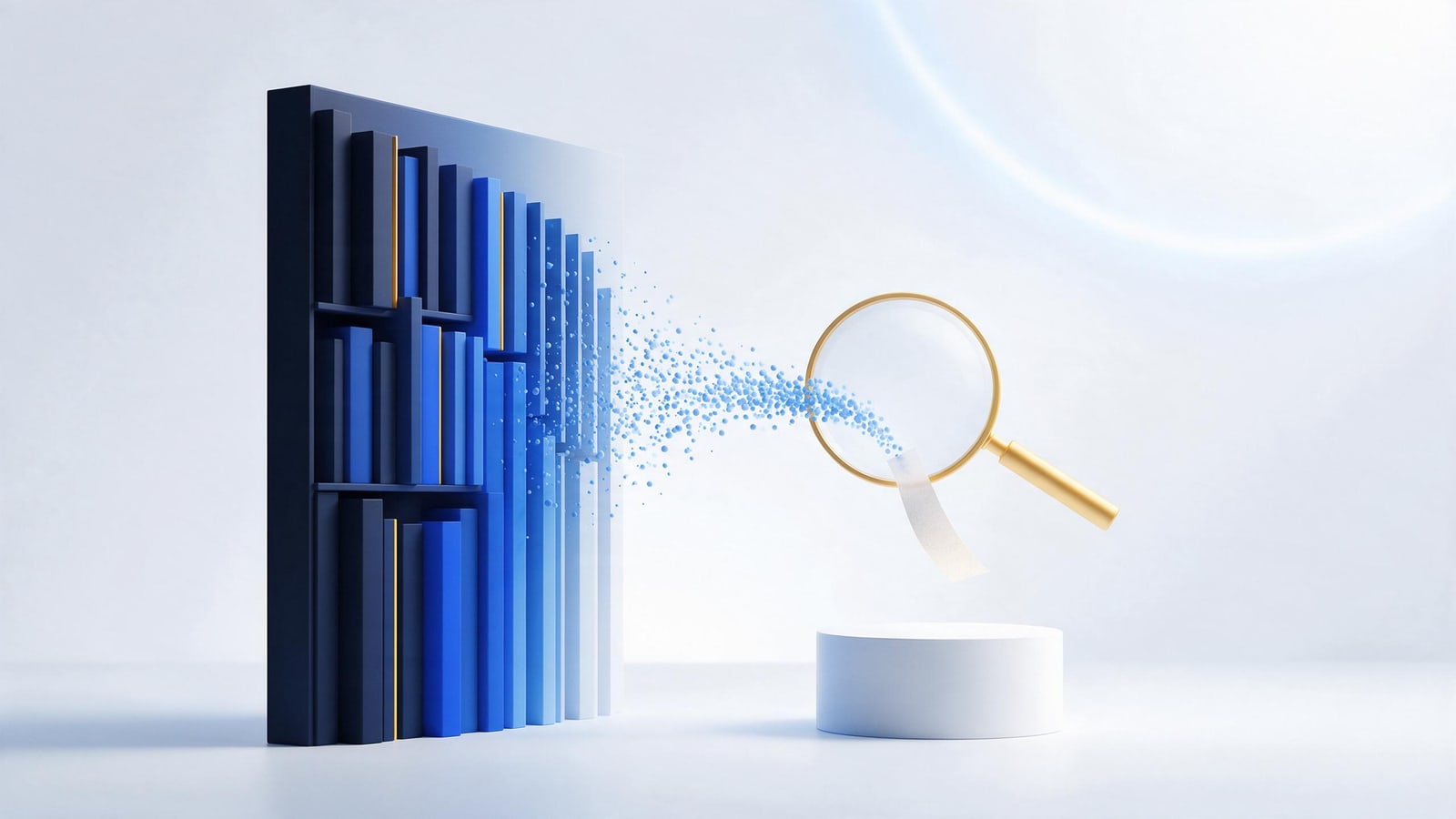
Google built the program on two tracks. The Partner Program invited publishers to opt in: Google displayed pages under contract and shared revenue. The Library Project was the contested part. Google struck deals with major research libraries, Harvard, Michigan, and Stanford among them, plus the New York Public Library, and scanned entire collections, including in-copyright books it had no license to copy.
Display rules depended on the book. Public-domain works became fully viewable and often downloadable. For in-copyright books without a publisher agreement, Google offered snippet view: the full text was searchable, but a result displayed only a short excerpt, roughly an eighth of a page, alongside links to retailers and libraries. By the time the case reached summary judgment, Google had scanned more than 20 million books.
The Authors Guild sued in September 2005 on behalf of authors of copyrighted books, and book publishers filed a parallel suit. Both targeted the Library Project, not the opt-in Partner Program.
How the Authors Guild Case Unfolded, 2005 to 2016
The first six years were about settlement, not fair use. In October 2008, Google agreed to a deal reported at roughly $125 million that would have created a Book Rights Registry, paid rightsholders for past scanning, and licensed future uses, including book sales through Google's platform. The Justice Department raised antitrust concerns, foreign governments objected on behalf of their authors, and many rightsholders complained the deal rewrote copyright through a class action they never chose to join.
Judge Denny Chin rejected the amended settlement in March 2011. The problem was the mechanism, not the merits: the deal would have granted sweeping forward-looking licenses and effectively locked up orphan works without adequate protection for absent authors. The case then returned to the fair-use question.
In November 2013, Chin granted Google summary judgment and held the Library Project fair use. In June 2014, the Second Circuit decided the parallel Authors Guild v. HathiTrust challenge to the library consortium's digital collection, holding that full-text search and access for print-disabled readers are fair uses. Judge Pierre Leval wrote that opinion, the judge whose 1990 law review article supplied the transformativeness framework the Supreme Court adopted in Campbell v. Acuff-Rose. On October 16, 2015, Leval authored the court's Authors Guild v. Google decision affirming Chin. The Supreme Court declined review in April 2016.
Transformation Without Substitution: The Core Holding
The court's central move was separating what Google copied from what Google did with the copies. Fair use factor one asks whether a use transforms the original by serving a different purpose or simply supersedes it. The verbatim scans passed because the court looked at function: the copies existed to power a search index, not to hand readers the books.
Leval was explicit that verbatim copying does not disqualify a use; purpose controls. A search result tells you where a term appears and in what context, information no bookstore or library offered at that scale, and it does not deliver the expression that makes a book worth buying. Snippet display got the same treatment. Showing about an eighth of a page, capped at three snippets per search, gave users enough to judge relevance and nothing resembling a substitute.
Google's engineering choices helped. Repeating a query returned the same snippets rather than fresh ones, and the court credited safeguards that kept users from assembling substantial text through strings of slightly varied searches. The Ninth Circuit had run similar logic in its search-thumbnail ruling against Perfect 10, where low-resolution copies could not substitute for the originals. Six years after Google Books, the Supreme Court used the same purpose-first reasoning to bless Google's verbatim copying of Oracle's Java API code for a new use.
One distinction matters for today's disputes: Google Books transformed the use, not the work. No expression was altered; a tool was built around it. After Warhol v. Goldsmith in 2023, courts scrutinize the specific use at issue rather than accepting a transformativeness label. Google's profit motive did not defeat the defense either, Campbell settled that question decades ago: commercial purpose is a factor, not a veto.
Market Harm: Why the Licensing Theory Failed
Fair use factor four asks whether the use harms actual or potential markets for the original. This was the Authors Guild's strongest ground, and where the court shut the door.
The substitution argument failed on the facts. Snippet view does not provide a meaningful substitute for a book, the court held. It points users toward purchase and borrowing options instead, and the record showed search making books more discoverable, including out-of-print titles with no market presence at all.
The licensing argument failed on doctrine. The Guild argued Google had usurped a derivative market, that authors would have licensed search rights, so Google's failure to pay was itself the harm. Leval rejected the theory. A rightsholder cannot leverage exclusive rights into a veto over transformative uses simply by asserting the power to license them; otherwise every transformative user could be held up for a fee and fair use would collapse into a licensing negotiation. The court also found no cognizable market for search licenses had been shown.
The takeaway for rightsholders: "they could have paid me" is not, by itself, a winning market-harm argument against a use a court deems genuinely transformative. The factor bites hard when a use substitutes for the original or takes a market the copyright owner actually exploits, exactly where the recent AI rulings turn.
The practical loss stands. The settlement died in 2011, and the fair-use win in 2015 replaced the promised registry with nothing.
What Authors Actually Won and Lost
What the case took: authors cannot use copyright law to stop Google from scanning their books, indexing the text, or displaying snippets. There is no per-scan fee, no compulsory license, no registry. A lawsuit demanding those things loses on fair use.
What it left untouched: everything else. Every exclusive right in Section 106 is intact. Google Books cannot lawfully display or distribute full texts of in-copyright books without a publisher agreement, and the ruling gives no shelter to anyone else. LibGen mirrors, PDF-sharing blogs, free-ebook sites, and torrent uploads remain garden-variety infringement, a distinction worth remembering when your work appears on the piracy sites covered in our LibGen ebook piracy enforcement explainer.
What authors gained: discoverability. For backlist and out-of-print titles, snippet search works like a catalog with global reach, and Chin's summary-judgment opinion credited the resulting traffic to retailers and libraries.
Two caveats that are not law at all. Google accepts requests from rightsholders to remove a book from Google Books, platform policy, not obligation, and the practical route if snippet display bothers you. And this is a U.S. ruling; digitization and snippet programs have met different treatment under other countries' copyright laws, so local rules govern foreign markets.
Why the AI-Training Cases Split From Google Books
Authors now ask whether the ruling means AI labs can train on books for free. The 2025 district-court decisions read the precedent narrowly, and the records differ in ways the Second Circuit itself flagged as decisive.
In Thomson Reuters v. Ross Intelligence, a Delaware court held in February 2025 that copying Westlaw headnotes to train a competing legal research tool was not fair use. The purpose matched the copied material, producing short descriptive answers: so the use competed rather than transformed. In Bartz v. Anthropic, a California court ruled in June 2025 that training a language model on lawfully purchased books is fair use, treating the use as highly transformative, while refusing to extend the defense to books sourced from shadow libraries; those claims were headed to trial until Anthropic agreed in late 2025 to a settlement reported at roughly $1.5 billion. In Kadrey v. Meta, another judge in the same district found training fair use on the record presented, warning that proof of AI outputs substituting for specific books could change the result, and later in 2025 rejected the authors' remaining market-dilution theory on the evidence before the court. The New York Times case against OpenAI and Microsoft proceeds on allegations that the model can output near-verbatim Times articles when prompted: output substitution, the one thing Google never did.
Four factual differences do the work. Google's users never received book text, while generative models can emit material resembling or matching training data and produce works that compete with the originals. Google scanned physical volumes its library partners owned, while several AI defendants filled training sets from pirate repositories. No functioning market for book-search licenses existed in 2015, while today publishers and news organizations actively sell training rights, so uncompensated ingestion plausibly harms a real market. And courts now read factor one through the specific-use lens of Warhol rather than rewarding innovation rhetoric in the abstract.
These are district-court rulings; appeals are pending or expected, and the map is still moving as of this writing. For case-by-case status, our coverage of the AI copyright lawsuits tracks where each fight stands.
What the Google Books Ruling Means for Your Books Today
Sort problems into three buckets, because the remedies differ.
Bucket one: Google Books snippets and search indexing. Leave these alone. A takedown notice aimed at a fair use will be rejected, and sending one anyway risks misrepresentation liability under Section 512(f), the lesson of the Ninth Circuit's dancing-baby decision, Lenz v. Universal. Our guide to when fair use means you should not file a DMCA notice walks through the analysis, and Google's exclusion request is the right channel for snippet objections.
Bucket two: pirated full copies. These are actionable everywhere. Delisting requests to Google strip pirate pages from search results, the DMCA process reaches the hosts themselves, and our DMCA playbook for authors covers the notice work. When hosting providers ignore notices, our takedown team handles the escalation.
Bucket three: AI products. If a model regurgitates your book when prompted, or a lab trained on pirated copies, you may have a live claim that Google Books does not shield, the 2025 rulings say as much about pirated sources and output substitution. Preserve prompts, outputs, dates, and screenshots; our guide to AI-generated content and copyright explains which facts support which theory.
Frequently Asked Questions
Did the Authors Guild ever win anything against Google?
No court ever found Google liable. The class settlement that would have paid rightsholders died in 2011, Google won summary judgment in 2013, the Second Circuit affirmed in 2015, and the Supreme Court declined review in 2016. The Guild's parallel case against the HathiTrust library consortium likewise failed on search and accessibility, leaving authors uncompensated for either digitization project.
Can I force Google to remove my book from snippet view?
Not through copyright claims. The Second Circuit held snippet display fair use, so no infringement theory will carry a demand letter. The practical route is Google's removal process for rightsholders, which excludes a book from Google Books on request. That is platform policy rather than a legal right, but it is the fastest resolution available.
Why is AI training contested when book scanning was fair use?
Because the Google Books record lacked the three features now doing the damage: outputs that substitute for training material, pirated source copies, and a functioning licensing market. Google's tool returned snippets, not book text; it scanned books its partners owned; and no market for search licenses existed in 2015. Change those facts and the analysis tightens.
Does the ruling let any company digitize my book without permission?
No. Fair use is judged case by case, and the Second Circuit approved one specific use: full-text search with restricted snippet display. It did not bless full-text distribution, resale, or feeding pirated copies into anything. The precedent binds federal courts in New York, Connecticut, and Vermont and carries persuasive weight elsewhere.
What can I do if someone posts my entire book online?
Treat it as ordinary infringement, untouched by the Google Books ruling. Document the URL and your ownership, register the copyright if you have not, send DMCA notices to the hosting provider and any platform involved, and request search delisting for the pirate pages. Where hosts ignore notices, a professional takedown service can escalate.
Your Next Steps
- Sort every instance of misuse into the three buckets above before spending money. Only full-copy piracy and AI problems are takedown targets; snippet search is not.
- Register your copyright promptly, before infringement or within three months of first publication, so statutory damages and attorney's fees stay on the table. Our piece on whether copyright registration is worth it covers the timing rules.
- Build your ownership file: final manuscript, dated drafts, ISBN and publication records. Our proof-of-ownership guide shows what hosts accept.
- Sweep for full copies using searches like your title plus "PDF," "free download," or "read online," and check the usual ebook piracy hubs.
- Send takedown notices to hosts and platforms, and calendar the counter-notice window so you are ready if one arrives, our article on what happens after a counter-notice explains the process.
- Submit a removal request to Google Books if you want your title out of snippet view; treat it as a policy request, not a legal demand.
- If an AI product outputs your text or your books surface in a leaked training corpus, preserve the evidence and get a professional read. Our guide on when to hire a copyright lawyer covers the threshold questions.